
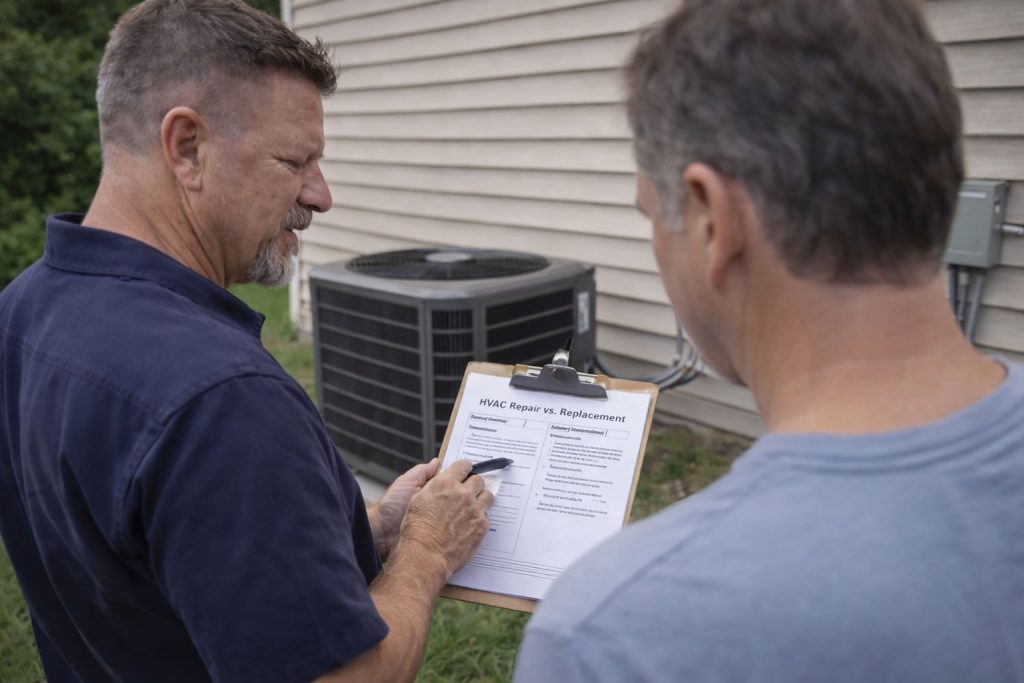
The number first: most AC repairs in Spicewood land between $250 and $700 in 2026, in line with the Austin-metro average of about $375 per fix — plus, occasionally, a modest trip premium that reflects the honest geography of living 30–45 minutes from most dispatch yards. But Spicewood bends the averages in its own ways: rural power is harder on electrical components, well water is harder on condensate systems, and a housing stock that runs from 1970s lake cabins to new hilltop builds means the same symptom can carry very different price tags on different roads. Here's the full 2026 price map, localized.
| Repair | Typical cost | How common |
|---|---|---|
| Condensate drain line clearing | $100–$250 | Very common (humidity + hard water) |
| Run capacitor replacement | $150–$300 | The most common repair — extra common on rural power |
| Contactor replacement | $150–$350 | Common |
| Fan motor (condenser) | $300–$700 | Common in heat waves |
| Blower motor | $400–$800 | Moderate |
| Refrigerant leak repair + recharge | $400–$1,000+ | Moderate; costs rising |
| Evaporator coil replacement | $900–$2,300 | Less common |
| Compressor replacement | $1,200–$2,500 | The big one |
Two Spicewood-specific notes on that table. Capacitors: already the region's most common failure, and rural electric service adds insult — voltage sags, brief outages, and the hard restarts that follow storms all shorten capacitor life, which is why the "hums but won't start" call spikes out here after every summer storm cycle. Drain lines: Hill Country humidity manufactures condensate by the gallon, and mineral-heavy well water accelerates the scale-and-algae buildup that clogs lines and trips float switches. A surprising share of "dead AC" calls out here end at the cheapest row of the table — which is the good news hiding in the plumbing.
Spicewood's older lake cabins carry a specific 2026 risk: systems old enough to run R-22 refrigerant, which has been phased out long enough that remaining supply prices at $100–$250 per pound. A major leak on an R-22 cabin system can cost more to refill than the rest of the repair combined — which is why honest techs increasingly route those conversations toward replacement, and why the replacement math deserves a read before the truck arrives, not after. For everything newer, R-410A now runs $50–$80 per pound installed as the industry transitions to R-454B. The rule that protects every wallet: refrigerant doesn't get consumed. Low charge means a leak; a top-off without a leak search is a payment plan on the same problem.
Tell us the symptom. Beaver matches Spicewood homeowners with a licensed, vetted AC pro who quotes the price before any work starts — free, no obligation.
Geography. Trip charges are the honest rural tax — some metro outfits price the drive, corridor-familiar companies absorb it, and asking up front sorts them fast. Season. The first 100° week and late August are triage weeks everywhere, and far-west calls get deprioritized against denser routes; shoulder-season scheduling is cheaper and faster out here more than anywhere. Diagnostic fees run $79–$129, credited toward the repair by the good outfits. Access. Gated drives, long private roads, and attic air handlers all add minutes, and labor is most of every bill — leave the gate code with the dispatcher. Warranty status. Systems under 10 years may still carry manufacturer parts coverage, which converts the scary rows of the table to labor-only pricing. Find the install paperwork before approving anything major.
Rural trip fees make the five-minute self-check even more valuable out here. Thermostat on cool, set below room temp, batteries live. Breakers — condenser breakers trip more on rural service than anyone expects, especially after storms; reset once, and if it trips again, stop and call. Filter to the light — no light through it, that's your airflow problem. Float switch at the drain pan — tripped means clogged line, and a wet/dry vac on the outside drain stub is a classic Spicewood Saturday fix. And check the condenser can breathe: live-oak leaves, cedar debris, and grass clippings crowd rural units fast. All safe, nothing voided, and any one of them can save you the diagnostic fee plus the drive.
Plan around the duty cycle: cooling season out here runs April through October, with 60–90 days above 95° in a typical year — roughly double the runtime of a northern-climate system, compressed onto equipment that also absorbs rural power's mood swings. Realistic Spicewood planning numbers: a minor repair ($150–$400) every two to three years through a system's mid-life, with the first major-repair conversation arriving around year 10–12 rather than the brochure's 15. Well-maintained systems reliably beat those numbers; emergency-only systems reliably miss them. And because out-of-warranty surprises hit harder when the nearest truck is forty minutes away, the maintenance-plan math — two visits a year at a fair price — mostly makes itself out here.
One habit that saves Spicewood homeowners real money: after every power outage, give the AC five minutes before expecting cool air — and if the outdoor unit doesn't restart on its own, kill it at the thermostat for five minutes and try once more before calling anyone. Compressors need pressure to equalize after hard stops, many systems run built-in restart delays, and the post-storm "dead AC" that resurrects itself after a proper reset is one of the corridor's most common non-repairs. If it trips the breaker a second time or restarts warm, stop — that's a real call, and running it further converts cheap problems into compressor problems. Knowing the ritual is free; not knowing it is a trip fee.
The shorthand: repair quote times system age, and past $5,000–$6,000, price a replacement. The Spicewood overlays: R-22 cabin systems needing sealed-system work are near-automatic replacements — the refrigerant alone breaks the math. Out-of-warranty compressor failures on 12+ year systems usually point the same way. And the efficiency tax of limping along is real: a system low on charge or running weak components draws longer cycles for the same cooling, and across a Hill Country summer that quietly costs more than the repair that would end it — a bill creep that hides easily on properties already running well pumps and outbuildings. When the math flips, the Spicewood replacement guide has the full 2026 numbers.
When the system's truly down in July and the earliest truck is tomorrow: close blinds on the west side by noon, run ceiling fans counterclockwise (they cool people, not rooms — turn them off in empty rooms), shift cooking outside or to the microwave, and let the house ride warmer overnight rather than fighting it. Lake access is Spicewood's cheat code — the water fixes morale even when it can't fix the thermostat. If anyone in the house is elderly, infant, or medically heat-vulnerable, say so when you book: legitimate dispatchers triage for it, and it's the one card worth playing early. And once the crisis passes, calendar the lesson — the tune-up booked in April is the cheapest version of this entire article.
Financing footnote: for repairs in the $1,000–$2,500 band, most established companies serving the corridor offer payment plans, and several credit diagnostic and recent-repair costs toward a replacement within the season. Ask about both up front; answers vary enough to swing the effective price by hundreds.
Shoulder-season maintenance is worth more out here than anywhere. A $100–$200 spring tune-up catches weak capacitors, marginal charge, and clogging drains while they're cheap — and April dispatch reaches Spicewood easily in a way August triage doesn't. Surge protection ($150–$300) is armor, not upsell, on rural power. Change filters monthly in summer, more often during cedar season. Flat-rate quotes in writing, old parts back, no same-day replacement decisions under duress, and a second opinion on anything over $1,500. The honest summary: Spicewood repair pricing is metro pricing plus geography — $250–$700 most of the time, four figures when compressors get involved, and the biggest local variables are the age of your refrigerant and the month you make the call.