
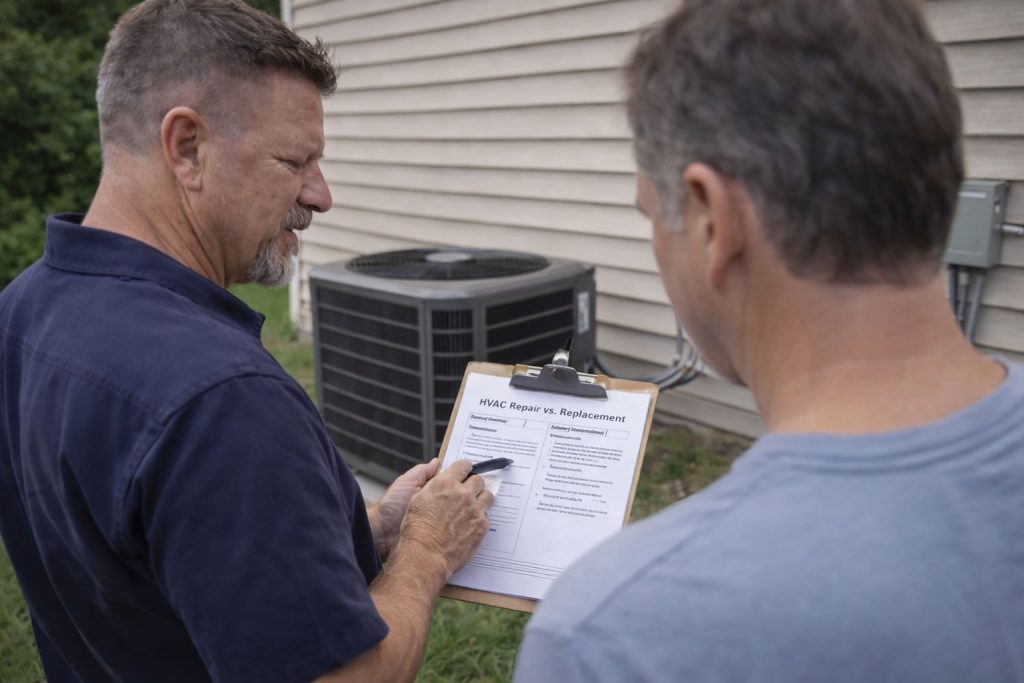
The county's most merciful AC failure is also its most misdiagnosed: the condensate line — garden-hose-diameter PVC carrying each system's daily gallons — choked by the algae this climate grows free and the scale this well water contributes enthusiastically, tripping the float switch that kills cooling to save ceilings and subfloors. The call that follows says "dead AC"; the truth says free DIY or $100–$250, with county footnotes worth knowing: the septic-side chemical discipline, the weekend place's unattended flood math, and the prevention tempo this water demands. The whole manual, county edition, below.
The biology is regional — warm, dark, wet PVC growing algae at greenhouse rates — and the county's chemistry accelerates it: well water's mineral load plates lines with the scale that slime anchors to, silty wells add sediment to the recipe, and the vintage-install tier contributes slopes and routings from eras with different opinions about drainage. (The treatment stack's quiet dividend: softened, filtered water slows the whole process — the coffee tastes better and the condensate line lives longer, same plumbing, same reason.) The failure sequence runs standard — pan fills, switch trips, system dies protectively — and the county's diagnosis premium applies: knowing this branch of the tree saves a 40-minute truck roll about a cup of vinegar.
The tells: system fully dead, breakers fine — float switch; water at the handler (closet installs announcing on subfloors, attic installs on ceilings); the outdoor stub dry on a humid day while the system runs; the soffit drip where emergency pans daylight — the flare gun made of water. The ritual: wet/dry vac sealed to the stub (rag gasket, seal being everything), 1–2 minutes, the slug's audible surrender, the tee's water test confirming, the switch reset. After: the vinegar cup down the access tee — the county's chemical of choice, septic-safe by nature — the pan sponged, the win banked. Survivors earn the $100–$250 visit (the menu's gentlest line, trip reality included, gate code to the dispatcher), and the re-tripper points at slope — the bellied vintage run whose one-time re-pitch ends the genre.
Cheapest truck visit in the book. Beaver matches Spicewood homeowners with a licensed, vetted pro who drives 71 — free, price quoted before any work.
The county's plumbing map matters here: most condensate daylights harmlessly outdoors, but installs that tie toward the septic side inherit the tank's chemical constitution — vinegar fine, harsh algaecides and bleach-heavy treatments not — and the professional clearing should know which map your property runs. The standing protocol: say septic when booking (the county's good techs ask anyway, per the competence tells the plumber guide catalogs), keep the chemical discipline house-wide, and let the tank's biology do its unbothered work. The county's systems interlock; the drain line's cup of vinegar respects all of them.
The clog's cruelest venue is the empty house: the line that blocks Tuesday overflows pans through Friday, and the discovery arrives with the luggage. The defense stack, county-standard: the float switch's veto confirmed annually (the test being thirty seconds at the spring visit), the leak sensor's text from the handler's vicinity (the $50 puck that beats the subfloor quote by three orders of magnitude), the arrival-day ritual's stub glance and handler check, and the away-mode humidity math — the 80–83° setting still condensing enough to need the line honest. Managed, the lake house's drain is a non-story; unmanaged, it's the flooring industry's quiet county patron. Information, as ever, is the address's whole utility.
Closing arithmetic, county rates: the jug of vinegar, the $50 sensor, and the confirmed switch stand against the subfloor quote, the drive, and the discovery-day mood — two digits of prevention against four of consequence, plus mileage. The county's humblest pipe stays its highest-yield line; twice a year, remember it, and this article's phone call never gets made.
The pump variant: installs pumping condensate uphill add the pump's reservoir, hum, and check valve to the audit — its failure wearing the clog's costume with its own $150–$300 answer. The rental wrinkle: the county's STR tier meets the clog mid-booking — the guest's "AC died" message decoding to the float switch more often than not, and the host's pre-season drain service plus the lockbox-note reset instructions saving the weekend's reviews. The post-storm cluster: outage weeks jostle systems into hard restarts whose first casualty is often the marginal drain's fragile equilibrium — the restart ritual and the stub glance pairing naturally. The dust-season load: cedar and caliche seasons feed pans their own sediment; the vinegar tempo exists for the climate the county actually has.
The sequence for the subfloor or ceiling that lost: source ended first (line cleared, switch reset), moisture read honestly — the county's closed-up weeks giving small leaks big head starts, so the meter's verdict outranks the eye's — and the failed stack piece retrofitted in the same mobilization, the accessible tee added where vintage installs skipped it ($75 of future vinegar access). Cabin-specific note: closet handlers over pier-and-beam soak insulation before floors confess — the crawl-space glance joins the assessment — and the remediation threshold arrives faster where ventilation was already seasonal. Insurance reads sudden-discharge kinder than neglect; the documented service file and the sensor's timestamp argue your side.
Scheduling coda: the county's drain calls cluster in early summer like the region's — spring bloom meeting first heavy condensate — and the May vinegar lap plus the pre-season visit beats the cluster at county prices. The genre grades on mercy everywhere; out here it also grades on mileage, and prevention keeps both grades clean.
The routine outpaces the accelerated biology: the vinegar ritual at doubled tempo (spring, mid-summer, and the well-water houses adding fall), the spring visit's drain service (line flushed, pan cleaned, switch tested — bundled per the county's logistics math), the humid-day stub glance joining the gate-and-generator round, and the treatment stack slowing the recipe at its source. The special cases file county-style: the freeze-thaw handoff's sudden flood, the renovation season's drywall-dust cement, the mini-split heads' gravity runs blown out with their filter rinses, and the outbuilding units' lines remembered at all. The closing arithmetic holds at county rates: a jug of vinegar and a confirmed switch against the subfloor quote and the drive — the county's humblest pipe remaining its highest-yield maintenance line, asking only to be remembered twice a year. Remember it.