
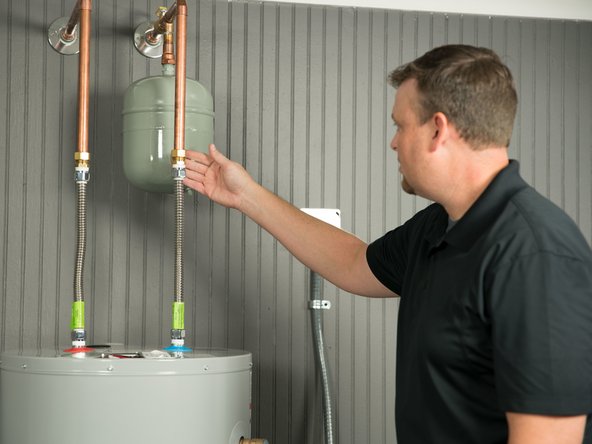
Out here the water heater quote comes with variables the city calculators never met: propane instead of natural gas, a well instead of a meter, a co-op line that surges when storms roll through, and — for a good share of Spicewood properties — a house that's empty more days than it's full. All four move the price or the decision. Here's the 2026 cost picture with the rural variables priced in.
A code-complete 40–50 gallon replacement runs $1,300–$2,600 in the Spicewood area — propane and electric both, with propane units costing slightly more and electric labor slightly less. The rural premium is smaller than people fear: established local plumbers fold the drive into normal pricing, though true emergency calls at distance do carry heavier trip fees, which is one more argument (of several coming) for replacing on schedule instead of on failure. Propane tankless runs $2,500–$4,000 cooperative and up to $6,500 when the propane system needs work — regulator, line sizing from the tank, capacity checks against winter furnace load. The tankless-vs-tank decision gets a full Spicewood treatment of its own; short version, outage behavior and treatment trains decide it out here.
The replacement meets today's code even if the original never met any: expansion control (with a well, the pressure tank often absorbs thermal expansion — but not always, and your installer should say which applies rather than assume), drain pan and piped drain, T&P discharge to a legal termination, combustion air and venting for propane units. Budget the same $300–$800 catch-up layer as anywhere — and out here add the propane inspection: the sediment trap, the flex connector's age, the regulator's. Old rural installs accumulate creative plumbing the way barns accumulate baling wire; the catch-up is where the creativity gets retired.
Untreated well water is the lifespan thief: sediment joins the tank's mineral layer early (the rumble arrives years ahead of the city schedule), hardness consumes the anode rod, and iron stains fixtures as a bonus. The cost implications: tanks in untreated water earn the low end of the 8–12 year range, sometimes under it, and the fix is upstream — a sediment filter and softener ahead of the heater stretch its life, protect a future tankless's heat exchanger, and pay for themselves across every appliance that touches water. One diagnostic freebie: rusty water from both taps is the well's iron, not the heater — from the hot side only, it's the tank. Check before you buy anything.
Ranges are honest; your house is specific. Beaver matches Spicewood homeowners with a licensed, vetted plumber — free, with the price itemized before any work starts.
Electric tanks out here die a death the city rarely sees: the post-outage surge. Co-op lines blink in every serious storm, and the restoration spike takes out heating elements and thermostats — a $150–$300 repair that repeats until somebody installs surge protection at the panel (cheap) or the heater (cheaper). If your electric tank has eaten two element replacements in three years, the tank isn't the problem, the electricity is; fix that layer first or the new heater inherits the diet. Propane tanks dodge this failure mode almost entirely — worth a point in their column when replacement time comes.
The standard decoder holds — elements/thermostats ($150–$300) worth fixing young, gas valves ($400–$900) rarely worth it old, tank-body leaks and hot-side rust terminal — but on untreated well water, subtract two years from the tank's stated age before applying any threshold. A 7-year-old tank on raw well water has city-tank-at-nine internals. And at a weekend place, weight reliability heavier than price: the repair that strands guests without hot water on a Saturday, forty minutes from the nearest parts counter, costs more than its invoice. Part-time properties should replace on the early side and pair the new unit with a leak sensor, because the worst-case leak out here runs for days before anyone's home to notice.
City sizing rules assume steady occupancy; Spicewood properties breathe — two people Tuesday, ten on the Fourth. Size the tank for the exhale: a 50-gallon high-recovery propane unit handles guest weekends far better than a bargain 40, and the price difference is small against the cost of cold-shower Saturdays. The well adds its own sizing note: heavy simultaneous use draws the pressure tank down and cycles the pump, so a bigger water heater doesn't fix slow-recovering pressure — if showers fade when the sprinkler runs, that's the well system's conversation, not the heater's, and bundling both assessments into one visit saves a second trip fee. For frequently-full houses, this is also where the tankless option re-enters: rated GPM handles the crowd, provided the propane supply and treatment train are engineered for it.
Everywhere, deferring a tired tank buys an after-hours premium and whatever unit is on the truck. Out here the multipliers stack: the distance-loaded emergency fee, the parts run measured in hours not minutes, and — for part-time places — the leak that starts Thursday and meets its first witness Saturday, having spent two days converting the utility room and whatever's below it into a claim. A tank past ten on well water is not a candidate for one more season; it's a scheduled failure with an unscheduled date. The countermove costs nothing: quote it now, replace it on a calm weekday, and let the emergency premium stay theoretical.
Rural quotes deserve the same decomposition as city ones — unit and warranty term, each code item, haul-away — plus the Spicewood lines: propane system verification priced or excluded, treatment (sediment/softener) quoted as an option, surge protection for electric. And schedule beats emergency by more out here than anywhere: the planned weekday replacement gets you bid comparison, the unit you chose, and no distance-loaded after-hours fee. A tank past ten on well water is a countdown; quote it this season and replace it on a calm Tuesday, not the Saturday the dock guests arrive.